Accessibility Options:
Since its debut in 1966, the Buehler Planetarium has evolved from a local star-gazing site into a cutting-edge hub for astronomical education. Established through the generosity of Emil Buehler, the facility originally focused on school programs and hand-crafted lectures featuring manually operated projectors and custom special effects.
Here is a look at the planetarium’s journey through the decades:
The Buehler Planetarium opened its doors to the public in 1966 with a specially modified Spitz A3P Star Projector. It projected 2,000 stars onto Buehler’s dome ceiling, 750 more than a normal model, and cutting-edge technology for its time. The inaugural director, Dr. Joel Martin, worked with Mr. Buehler and Mr. Spitz to design a unique teaching planetarium.
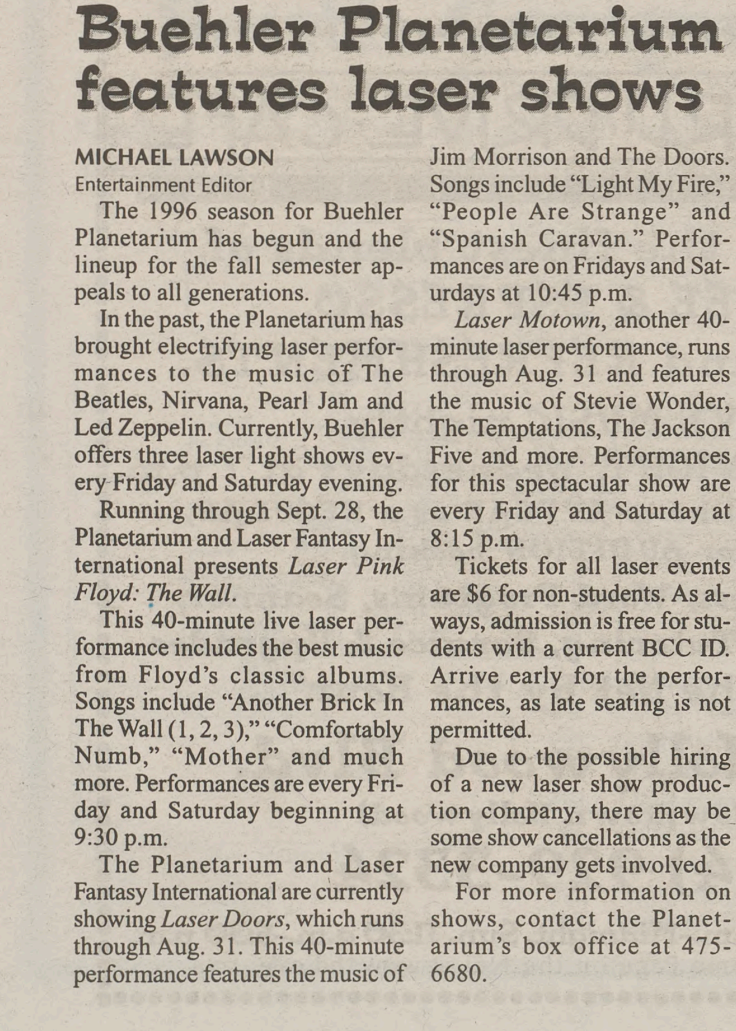
A new form of entertainment came to the planetarium in the form of light shows performed by a company called “Eye See The Light Show." This provided a balance in programming between education and entertainment with many attending both on the same night. A larger variety of educational programs and nights of public telescopic viewing and quest lectures.
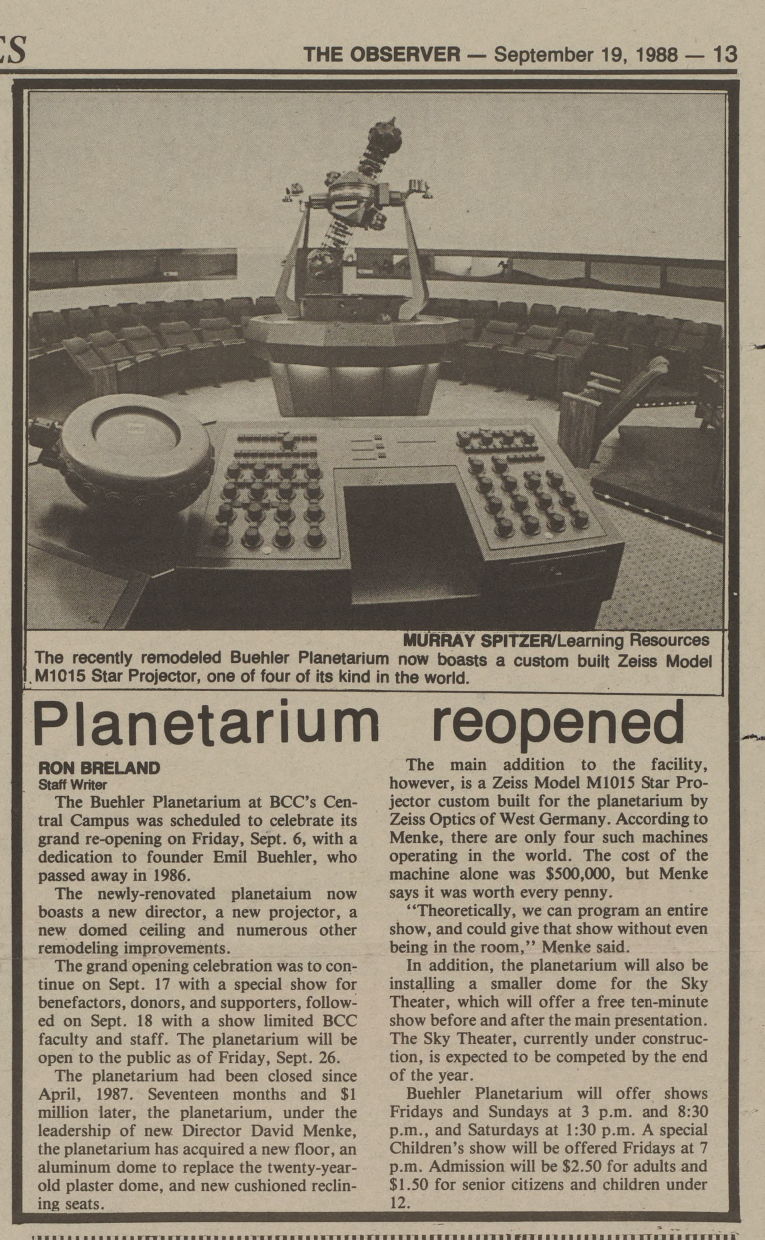
A period of massive growth. While undergoing a total renovation in 1985, the facility utilized a portable planetarium to keep serving students. By 1988, it became home to the Zeiss M1015 mechanical projector (one of only three in the U.S.) and a state-of-the-art Sky-Skan automation system.
The facility expanded its reach by opening the Buehler Observatory in 2002, providing the public with guided access to high-powered telescopes. In 2005, the transition to digital projection began.
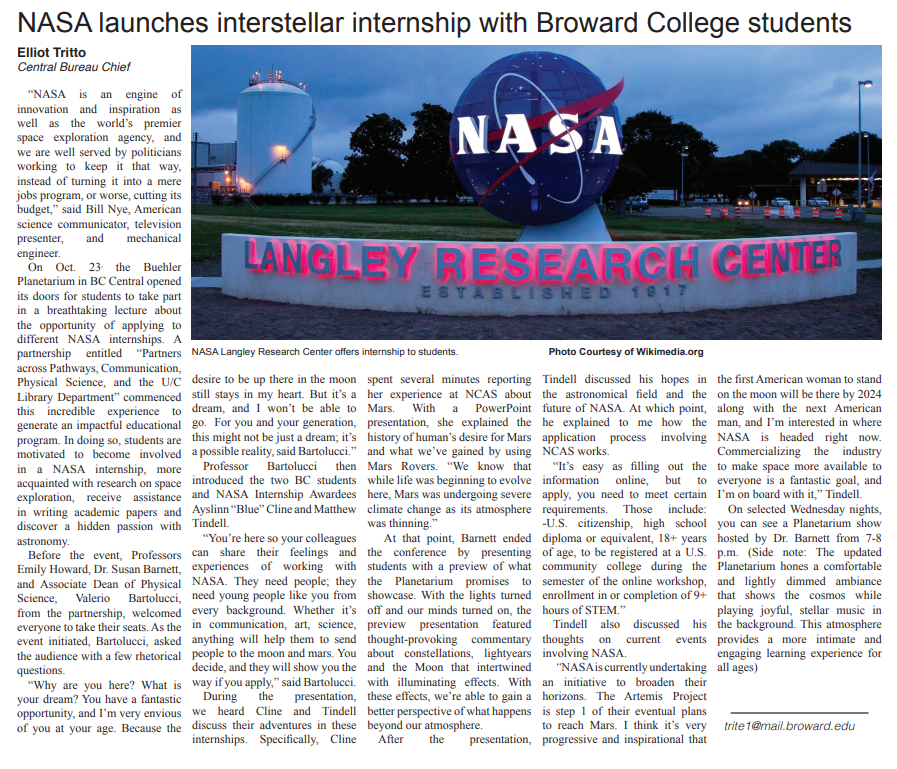
Today, the planetarium boasts 4K laser projection and Digital Sky Dark Matter software, ensuring visuals are powered by real-time internet data and showing hundreds of thousands of stars and galaxies on the dome.
The tabs below include some of the local media history around the Buehler Planetarium.